

Historic Auckland Summit: PM Modi Charts New Course for India-New Zealand Strategic Ties
DNI SUMMARY — KEY POINTS
- Prime Minister Narendra Modi arrived in Auckland for a two-day state visit, marking the first time an Indian leader has traveled to New Zealand in four decades.
- The diplomatic mission follows a highly productive stop in Australia where the two nations finalized landmark agreements on defense innovation and critical mineral supply chains.
- Bilateral discussions with Prime Minister Christopher Luxon are centered on expanding economic cooperation, agricultural technology, and strengthening the existing India-New Zealand Free Trade Agreement framework.
- Government officials and diplomatic analysts emphasize that this historic visit is designed to consolidate India’s regional partnerships and promote a free and open Indo-Pacific.
- The final leg of this three-nation tour concludes with high-level interactions between the Prime Minister and prominent local business leaders, sports figures, and the Indian diaspora.
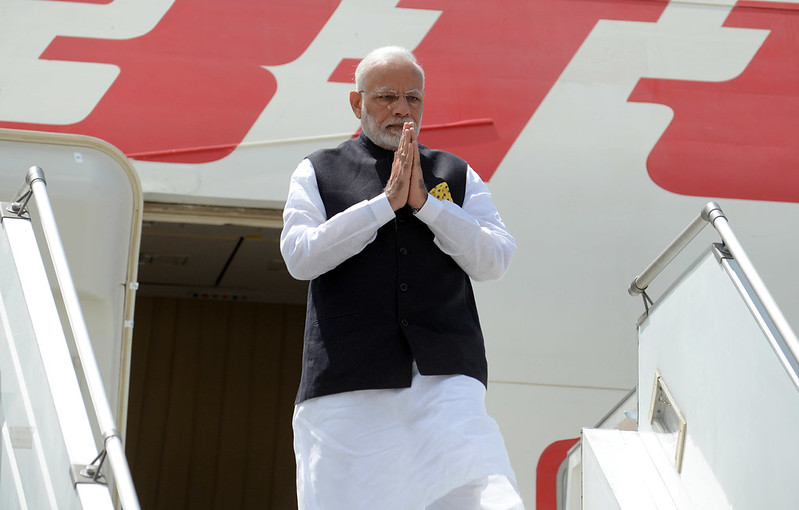
Prime Minister Narendra Modi touched down in Auckland this week, initiating the final segment of a high-stakes three-nation diplomatic tour that has reshaped India’s engagement in the Pacific. This arrival carries immense historical weight, as it serves as the first state visit by an Indian Prime Minister to New Zealand in over forty years. Met by Prime Minister Christopher Luxon at the airport, the leaders shared a public embrace, signaling a personal warmth that mirrors the deepening professional rapport between their respective administrations.
Strengthening the Pacific Partnership
Strengthening the Pacific Partnership
The agenda for this two-day visit is strictly focused on transforming economic and strategic ties that have long remained under-leveraged. Officials are prioritizing the implementation of the recent Free Trade Agreement, which serves as the bedrock for new commercial engagements between the two democracies. Beyond commerce, the talks are expanding into niche areas such as agricultural technology and renewable energy, where both countries seek to leverage shared expertise to combat climate change and ensure regional food security.
This visit marks the first time an Indian Prime Minister has conducted a state visit to New Zealand in four decades.
Securing Mineral Supply Chains
Prior to his arrival in Auckland, the Indian Prime Minister concluded a whirlwind series of meetings in Melbourne that successfully modernized the existing bilateral security framework. By signing a new Joint Declaration on Defence and Security Cooperation, India and Australia have effectively superseded an outdated 2009 pact. This new agreement paves the way for deeper military integration and the establishment of a dedicated innovation corridor, significantly enhancing the defensive posture of both nations within the competitive Indo-Pacific theater.
Securing Mineral Supply Chains
Engaging the Local Economy
A major victory from the Australian leg of the trip involves the formalization of administrative arrangements for the Nuclear Cooperation Agreement. This move clears logistical hurdles for the export of uranium, supporting India’s ambitious transition toward civil nuclear energy programs. By securing these critical mineral supply chains, the delegation has ensured that both countries are better positioned to weather global supply shocks while advancing their respective clean energy agendas in the coming decade.
The new India-Australia Joint Declaration on Defence and Security Cooperation effectively replaces the significantly outdated 2009 security pact.
The Prime Minister’s itinerary intentionally balances rigorous state-level governance with direct outreach to the vibrant Indian diaspora living across the region. During his time in Melbourne, he addressed a massive gathering of nearly 30,000 people, reinforcing the cultural bridge that sustains bilateral relations. In Auckland, a similar community event is expected to highlight the role of the Indian expatriate population in fostering innovation, educational exchange, and soft-power influence within the Kiwi social fabric.
Vision for Regional Stability
Engaging the Local Economy
Business leaders and sports icons are playing a central role in this diplomatic outreach as the delegation seeks to diversify the scope of the partnership beyond traditional government-to-government interaction. Through the India-Australia CEO Forum and similar planned dialogues in New Zealand, the government is facilitating new channels for private investment. These meetings aim to foster a climate where startup ecosystems and traditional trade sectors can flourish under the umbrella of closer diplomatic and economic alignment.
Looking toward the broader geopolitical landscape, the tour reinforces India’s Act East Policy and the MAHASAGAR Vision. By coordinating closely with Indonesia, Australia, and New Zealand, the current administration is creating a robust, rules-based architecture designed to maintain regional stability. As this mission concludes, the focus will shift toward the practical execution of these new agreements, with both sides expressing optimism that the current momentum will lead to tangible long-term prosperity for all nations involved.
KEY TAKEAWAYS
Nearly 30,000 members of the Indian diaspora attended the Prime Minister's address in Melbourne, highlighting deep people-to-people connections.
The delegation finalized critical administrative arrangements to enable the export of Australian uranium for India's peaceful civil nuclear energy programs.